
What Is a Heat Interface Unit
Last updated: August 11, 2026
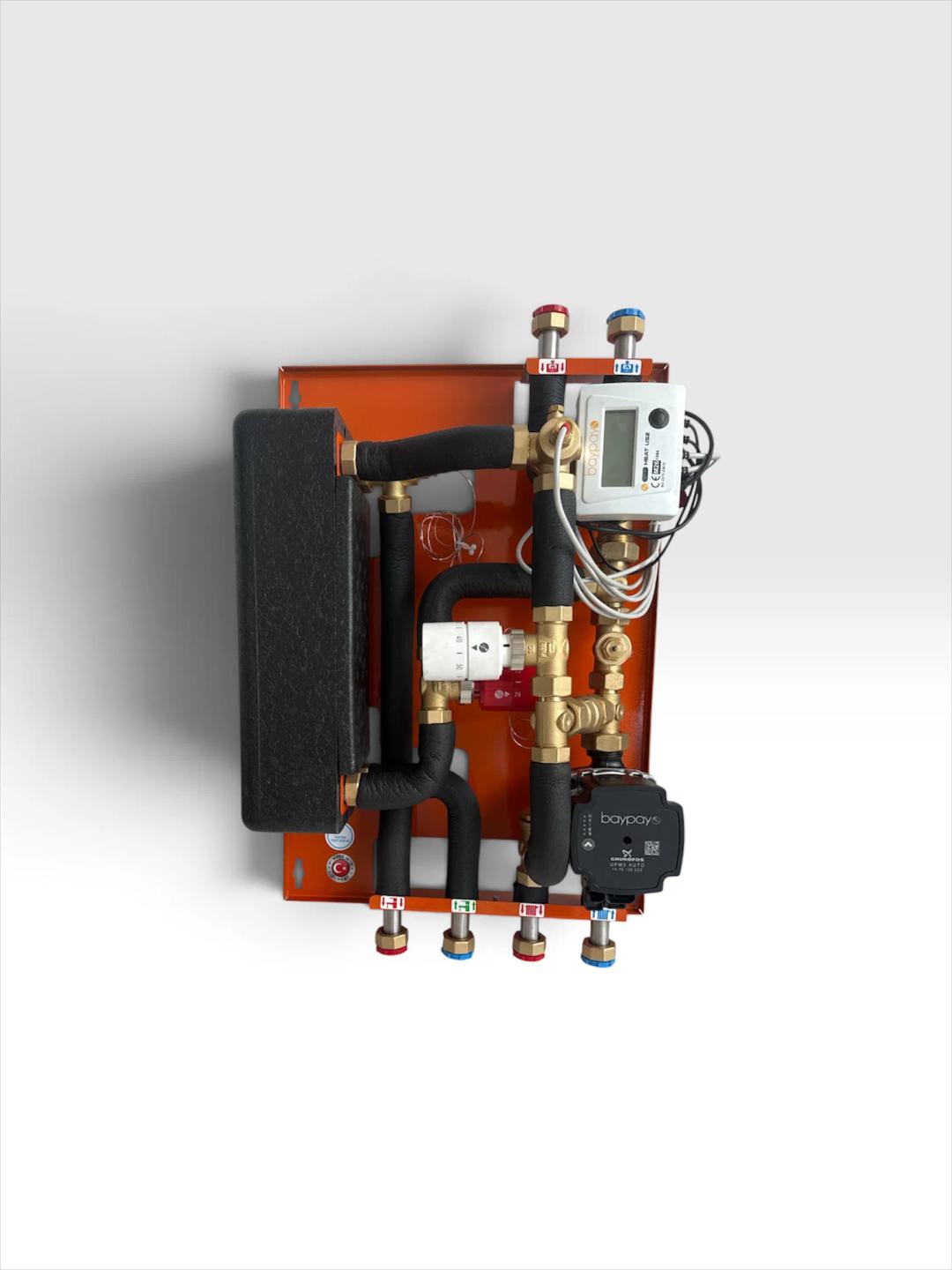
What Is a Heat Interface Unit (HIU)? A Complete Guide to Apartment Heat Interface Units A Heat Interface Unit (HIU) connects an apartment to a central or district heating network, providing space heating and domestic hot water while enablin…
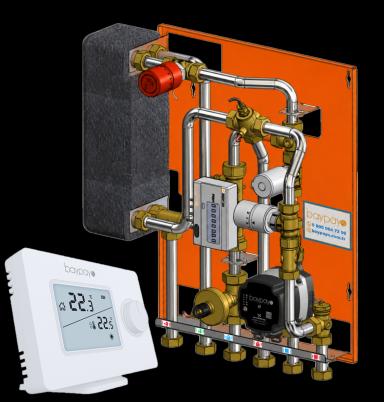
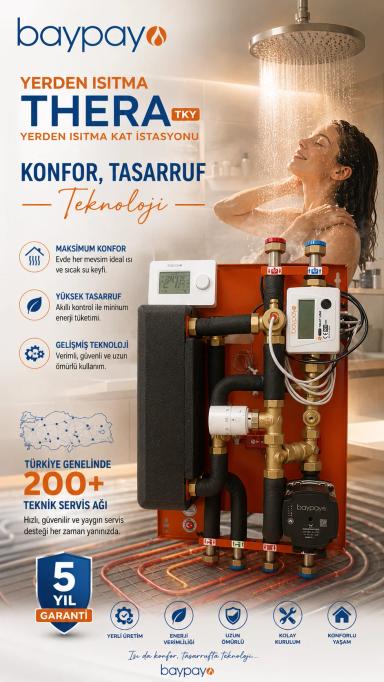
What Is a Heat Interface Unit (HIU)?
A Complete Guide to Apartment Heat Interface Units
Baypayo Heat Interface Unit Solutions for Central Heating Systems
A Heat Interface Unit (HIU) is a compact heating and hot water interface installed inside an apartment or individual dwelling that connects the property to a central heating or district heating network.
In residential buildings, apartment complexes and large housing developments, an HIU provides an efficient way to deliver space heating and domestic hot water from a central energy source to individual apartments.
Instead of installing an individual gas boiler in every apartment, the central heating plant supplies thermal energy through a primary network. The Heat Interface Unit installed at the apartment entrance transfers and controls this energy according to the requirements of the individual dwelling.
In Türkiye, this type of system is commonly known as a Heat Interface Unit ( HIU) / , Substation or Heat Substation.
Internationally, however, the most widely recognised technical term is:
Heat Interface Unit (HIU).
Baypayo develops and manufactures apartment heat interface solutions for central heating applications, including its 6-pipe Heat Interface Unit / Substation range with 35 kW, 50 kW and 65 kW capacity options for radiator-based heating systems.
What Is a Heat Interface Unit?
A Heat Interface Unit (HIU) is the interface between a central heating system and an individual apartment.
The central plant produces or supplies the thermal energy required by the building. This energy is transported through the primary heating network to individual apartments.
The HIU receives this energy and manages its distribution within the apartment.
Depending on the system design, an HIU can provide:
- Space heating
- Domestic hot water
- Apartment-level temperature control
- Heat metering
- Hot water metering
- Flow control
- Temperature control
- Energy monitoring
- Integration with room thermostats
- Integration with building automation systems
The HIU does not normally generate heat in the same way as an individual boiler. Instead, it transfers and controls thermal energy supplied by the central heating plant.
This makes the HIU a critical component between the central energy source and the individual apartment.
Heat Interface Unit vs. Traditional Boiler
One of the main reasons HIUs are becoming increasingly important in modern residential developments is the ability to replace individual boilers with a centralised heating solution.
In a traditional apartment building, each dwelling may have its own gas boiler.
With a central heating system using HIUs, the building can have a central boiler room, heat pump system, district heating connection or another central heat source.
Thermal energy is then distributed to individual apartments through a primary pipe network.
Each apartment has its own HIU.
This creates a system based on:
Central heat generation + apartment-level heat interface + individual control + energy metering
The result is a different approach to residential heating design.
The central plant handles heat generation while the HIU manages the interface with each dwelling.
How Does a Heat Interface Unit Work?
The operating principle of an HIU is relatively straightforward.
The central heating system sends hot water through the primary network.
When an apartment requires heating or domestic hot water, the HIU responds to the demand and controls the flow of primary heating water.
Depending on the HIU design, plate heat exchangers can transfer thermal energy from the primary network to the apartment's heating and domestic hot water circuits.
Control valves regulate the required flow.
Temperature sensors and control components monitor system conditions.
A heat meter can also be installed to measure the thermal energy consumed by the apartment.
Therefore, the basic process can be summarised as:
Central heat source → Primary heating network → Heat Interface Unit → Apartment heating and domestic hot water
Modern HIUs can provide rapid response and controlled hot water production while avoiding the need for a separate gas boiler inside every apartment.
What Is an Apartment Heat Interface Unit?
An Apartment Heat Interface Unit is an HIU specifically designed for installation within an individual apartment.
It is often installed close to the apartment entrance, inside a utility cupboard, technical cabinet or dedicated service area.
This configuration provides several practical advantages.
The apartment has its own heating interface while the main energy source remains centralised.
This allows the building to combine central energy generation with individual apartment control.
An apartment HIU can therefore be considered the technical bridge between:
District heating or central heating network
and
Individual apartment heating and hot water system.
For this reason, the term Apartment Heat Interface Unit is highly relevant when searching for apartment-based HIU solutions internationally.
What Is a Flat Station?
In some European markets, a Heat Interface Unit is also called a Flat Station.
The term describes the same basic concept: a compact unit serving an individual flat or apartment from a central heating network.
Depending on the manufacturer and market, you may see the following terms:
- Heat Interface Unit
- HIU
- Apartment HIU
- Flat Station
- Heat Substation
- District Heating Substation
- Apartment Heat Station
- Residential Heat Interface Unit
- Substation
These terms are related, but the exact configuration can vary depending on whether the unit provides heating only, domestic hot water only, or both heating and domestic hot water.
What Is a Heat Substation?
The term Heat Substation is also widely used for systems that connect a central heating network to individual properties.
A heat substation can describe a larger energy interface, while an HIU generally refers to a compact unit installed within an individual apartment or dwelling.
In Turkish residential projects, the term Kat Isı İstasyonu is commonly used for apartment-level systems.
Baypayo uses the terminology Kat Isı İstasyonu / Substation / Heat Interface Unit to describe its apartment heating solutions.
This makes the product relevant both to the Turkish market and to international technical searches.
Heat Interface Unit
Baypayo develops and manufactures Heat Interface Unit / Substation solutions for centrally heated residential buildings.
One of Baypayo's product ranges is the 6-Pipe Heat Interface Unit, available in 35 kW, 50 kW and 65 kW configurations.
The system is designed particularly for radiator-based heating applications.
The product range includes:
- 35 kW HIU
- 50 kW HIU
- 65 kW HIU
- 6-pipe configuration
- Radiator heating compatibility
- Optional heat meter
- Domestic hot water metering compatibility
- Room thermostat compatibility
- Smart automation integration
- Temperature and pressure protection
- Compact construction
- Service-friendly design
Baypayo's product documentation identifies the system as a 6-Pipe Heat Interface Unit / Substation and specifies 35 kW, 50 kW and 65 kW capacity options.
6-Pipe Heat Interface Unit
The Baypayo 6-Pipe Heat Interface Unit has been developed for central heating systems using radiators.
The six-pipe configuration is designed around the project's primary and secondary service requirements.
Depending on the project configuration, the connections can include:
- Heating flow
- Heating return
- Domestic hot water flow
- Domestic hot water return
- Circulation
- Supply connection
The exact hydraulic arrangement should always be confirmed against the mechanical design of the project.
A major advantage of a modular HIU configuration is that the heating, hot water, metering and control components can be integrated into a compact apartment-level system.
35 kW Heat Interface Unit
The 35 kW Heat Interface Unit is one of Baypayo's capacity options for apartment heating applications.
The correct HIU capacity should not be selected simply according to apartment floor area.
The design should consider:
- Building heat loss
- Apartment heat demand
- Radiator capacity
- Domestic hot water demand
- Peak simultaneous demand
- Primary flow temperature
- Primary return temperature
- Available differential pressure
- Hydraulic design
- Heat exchanger performance
Therefore, 35 kW should be regarded as a project-specific capacity option rather than a universal solution for a particular apartment size.
50 kW Heat Interface Unit
The 50 kW Heat Interface Unit provides a higher capacity option for residential applications with increased heating and domestic hot water requirements.
It can be considered for larger apartments and projects where the calculated peak demand requires a higher-capacity interface unit.
As with every HIU, the final capacity should be selected based on engineering calculations rather than apartment size alone.
65 kW Heat Interface Unit
The 65 kW Heat Interface Unit is the higher-capacity option within Baypayo's 6-pipe radiator-based HIU range.
It can be considered for larger apartments or applications with higher heating and domestic hot water demand.
Correct sizing remains essential.
An oversized HIU is not automatically a better HIU.
The most suitable capacity is the capacity that matches the actual design requirements of the building and apartment.
Heat Interface Unit for Radiator Heating
Radiator-based central heating remains common in many residential buildings.
A radiator-compatible HIU receives thermal energy from the central network and supplies the apartment heating circuit according to demand.
The Baypayo 6-pipe HIU has been developed specifically for radiator heating systems.
It can also be combined with apartment-level temperature control and compatible metering systems.
This creates a complete system consisting of:
Central heating → HIU → radiator circuit → room temperature control
Heat Interface Unit for Domestic Hot Water
Domestic hot water is one of the most important functions of an apartment HIU.
A properly designed HIU can provide domestic hot water on demand by transferring heat from the primary heating network.
This approach can eliminate the need for a large individual hot water storage tank inside every apartment, depending on the system design.
Instantaneous domestic hot water production can also reduce the need to maintain stored hot water at all times.
For residential developments, this can provide a compact and practical solution.
Heat Interface Unit and Heat Metering
Heat metering is another important part of an apartment HIU system.
A heat meter measures the thermal energy delivered to an individual apartment.
The measured energy can be used for:
- Energy monitoring
- Consumption analysis
- Billing
- Heat cost allocation
- Building energy management
Baypayo's HIU range supports optional heat meter integration.
The product can also be configured with compatible domestic hot water meters and automatic metering systems.
This makes the HIU an important component of a modern apartment-level energy management system.
Why Is Heat Metering Important in an HIU System?
In a centrally heated building, the energy source may be shared by many apartments.
Without individual measurement, it becomes difficult to understand how much energy each apartment consumes.
A heat meter provides a measurement of the thermal energy delivered to the apartment.
This supports a more transparent energy management structure.
The combination of:
Heat Interface Unit + Heat Meter + Meter Reading System
can therefore provide a complete apartment-level energy measurement solution.
Heat Interface Unit with Room Thermostat
Apartment comfort depends not only on the amount of energy supplied but also on how effectively the system responds to room temperature demand.
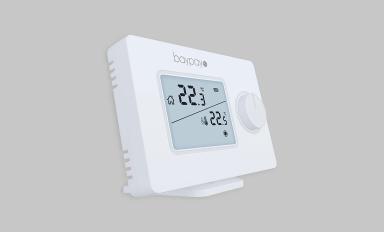
A room thermostat can communicate the heating demand from the apartment to the HIU control system.
Depending on the system configuration, the thermostat can control valves or actuators associated with the heating circuit.
Baypayo HIUs are designed to be compatible with Baypayo room thermostat solutions and smart automation systems.
This enables the apartment heating system to respond to actual user requirements instead of operating continuously at a fixed level.
Smart Heat Interface Unit and Building Automation
Modern residential buildings increasingly require connected heating systems.
An advanced HIU can be integrated with:
- Smart thermostats
- Heat meters
- Domestic hot water meters
- Automatic meter reading
- Building automation
- Remote monitoring
- Energy management software
This creates an infrastructure where apartment-level heating can become part of a wider smart building system.
Baypayo's product ecosystem includes heat meters, metering technologies, automation and heating solutions, allowing HIU systems to be considered as part of a broader energy management platform.
Advantages of a Heat Interface Unit
A well-designed HIU system can offer several advantages for residential buildings.
Centralised heat generation
Heat can be generated from a central plant rather than individual boilers in every apartment.
Individual apartment control
Each apartment can control its own heating demand.
Domestic hot water on demand
Depending on the HIU configuration, domestic hot water can be produced when required.
Heat metering
Individual energy consumption can be measured.
Compact installation
An HIU can occupy considerably less space than a complete boiler and hot water system.
Easy service access
A well-designed HIU provides access to key components for maintenance.
Reduced dependence on individual boilers
A central heating network can replace individual gas boilers in suitable developments.
Integration with automation
HIUs can be combined with thermostats, meters and building automation systems.
Heat Interface Unit Installation
Correct installation is essential for HIU performance.
An HIU should be installed according to the manufacturer's instructions and the mechanical design of the project.
The installation process generally involves:
- Confirming the HIU model and capacity.
- Checking the primary flow and return connections.
- Checking the domestic hot water connections.
- Confirming the heating circuit connections.
- Installing the heat meter where specified.
- Connecting the room thermostat where required.
- Connecting electrical and control components.
- Checking valves and filters.
- Performing pressure and leakage tests.
- Commissioning the HIU.
- Checking temperatures and flow rates.
- Confirming the operation of heating and domestic hot water.
- Verifying metering equipment.
Correct commissioning is particularly important.
Industry guidance also emphasises that HIUs must be correctly selected, sized, installed and commissioned to achieve the expected system performance.
Why HIU Commissioning Matters
A Heat Interface Unit can be a high-performance product, but incorrect commissioning can prevent the system from operating correctly.
Problems may occur if:
- Flow rates are incorrect.
- Primary temperatures are unsuitable.
- Differential pressure is inadequate.
- Filters are blocked.
- Sensors are incorrectly installed.
- Control valves are not calibrated.
- Heat meters are installed incorrectly.
- The hydraulic system is not balanced.
For this reason, commissioning should be treated as an important engineering stage rather than simply the final step of installation.
Heat Interface Unit Maintenance
Regular maintenance is important for the long-term operation of an HIU.
Maintenance may include inspection of:
- Heat exchangers
- Control valves
- Sensors
- Filters
- Actuators
- Pressure conditions
- Temperature sensors
- Heat meters
- Domestic hot water meters
- Electrical connections
- Thermostats
- Seals and fittings
The required maintenance frequency depends on the project, water quality, operating conditions and manufacturer recommendations.
Regular service can help identify problems before they develop into major system failures.
Heat Interface Unit Service and Repairs
The service network behind an HIU is as important as the product itself.
An HIU can remain in operation for many years, which means that maintenance, repair and spare parts must remain available throughout its service life.
Baypayo provides technical support for its heating and metering solutions and offers service and repair capabilities for its heat interface systems.
For large residential projects, this is particularly important because a building may contain dozens or hundreds of individual HIUs.
A strong service infrastructure can reduce downtime and make maintenance easier to manage.
Heat Interface Unit Spare Parts
Long-term spare part availability is an important consideration when selecting an HIU manufacturer.
Typical HIU replacement components may include:
- Control valves
- Sensors
- Actuators
- Thermostats
- Filters
- Flow meters
- Heat meters
- Seals
- Connection components
- Pumps
- Control components
A modular design allows technicians to identify and replace individual components rather than replacing the complete HIU.
This approach can simplify maintenance and help extend the useful service life of the system.
Baypayo's approach to HIU systems includes service, repair and component replacement support. This is particularly valuable for projects that require long-term technical support.
Why Choose a Heat Interface Unit Manufacturer?
When selecting an HIU, the manufacturer should be evaluated in addition to the technical specifications of the product.
Important questions include:
- Who manufactures the HIU?
- Is technical support available?
- Are spare parts available?
- Is there a service network?
- Can the manufacturer support large projects?
- Can the HIU be integrated with heat meters?
- Is automation supported?
- Are different capacities available?
- Can the manufacturer provide project-specific technical assistance?
For large housing projects, the manufacturer becomes a long-term technical partner rather than simply a product supplier.
Why Choose Baypayo Heat Interface Units?
Baypayo's approach combines manufacturing, heating technology, heat metering, automation and after-sales service.
The Baypayo 6-pipe Heat Interface Unit range offers:
- 35 kW capacity
- 50 kW capacity
- 65 kW capacity
- Radiator heating compatibility
- Optional heat metering
- Domestic hot water metering compatibility
- Room thermostat compatibility
- Smart automation integration
- Temperature and pressure protection
- Compact design
- Service-friendly construction
Baypayo's product documentation also identifies the system as a 6-Pipe Substation / Apartment Heat Station designed for central heating applications.
Heat Interface Unit for Large Residential Projects
HIUs are particularly suitable for:
- Apartment buildings
- Residential complexes
- Housing developments
- High-rise residential projects
- District heating projects
- Student accommodation
- Mixed residential developments
- Central heating renovation projects
Large projects benefit from standardised apartment-level heating equipment.
When every apartment uses a consistent HIU configuration, installation, commissioning, maintenance and spare parts management can become easier.
For developers and mechanical contractors, standardisation can also simplify project management.
Heat Interface Unit for Developers and Contractors
For a property developer, selecting an HIU is a long-term decision.
The product must work during construction, commissioning and many years of operation.
A successful HIU project requires:
Engineering + manufacturing + installation + commissioning + metering + service + spare parts
Baypayo's integrated approach is designed around this complete lifecycle.
This is especially relevant to large residential developments where the number of apartment-level heating units can be significant.
Heat Interface Unit for Mechanical Contractors
Mechanical contractors need an HIU that is practical to install and maintain.
A compact, clearly arranged system can reduce installation complexity.
Important features include:
- Clearly identified connections
- Accessible service components
- Compact dimensions
- Modular construction
- Easy meter installation
- Accessible control components
- Manufacturer technical support
Baypayo's 6-pipe HIU is designed with a compact structure and service accessibility in mind.
Heat Interface Unit for Building Management
Building managers need reliable systems that can be maintained efficiently.
For a residential complex with many apartments, even a small number of recurring HIU faults can create significant service workload.
A complete HIU service strategy should therefore include:
- Preventive maintenance
- Fault diagnosis
- Spare parts
- Metering support
- Technical documentation
- Service response
- Manufacturer support
A manufacturer with an established service infrastructure can provide significant long-term value to building management teams.
HIU and Energy Efficiency
Energy efficiency is not simply about reducing the amount of energy used.
It is also about delivering energy when it is needed and controlling the system according to actual demand.
An efficiently designed HIU system can contribute to energy management through:
- Modulating control valves
- On-demand domestic hot water production
- Individual temperature control
- Heat metering
- Appropriate heat exchanger sizing
- Correct hydraulic balancing
- Insulated construction
- Smart control systems
HIU performance is therefore closely connected to the quality of the overall heating network.
A well-designed HIU cannot compensate for an incorrectly designed central heating system.
The plant room, primary network, HIU, secondary heating system and controls must work together.
Heat Interface Unit and District Heating
HIUs are commonly associated with district heating and communal heating networks.
A central energy plant supplies heat to multiple properties through a network of insulated pipes.
Each property receives the energy through its own HIU.
The basic system can be represented as:
Central Energy Plant
↓
District / Communal Heating Network
↓
Apartment Heat Interface Unit
↓
Space Heating + Domestic Hot Water
This architecture allows heat generation to remain centralised while heating and hot water demand can be controlled at apartment level.
Heat Interface Unit and Heat Pumps
HIU technology is not limited to conventional boilers.
Depending on the design of the heating network, an HIU can be used with different central heat sources, including:
- Central boilers
- Heat pumps
- District heating networks
- Geothermal systems
- Other central thermal energy sources
The key requirement is that the central network provides suitable hydraulic and thermal conditions for the selected HIU.
Therefore, HIU selection should always be made together with the design of the central heating system.
What Is the Difference Between an HIU and a Boiler?
The main difference is where the heat is generated.
A boiler generates heat locally.
An HIU generally receives thermal energy from a central heat source and transfers or controls that energy for the apartment.
Boiler
- Generates heat locally
- Usually uses gas or electricity
- Serves one dwelling
- Requires individual combustion equipment when gas-fired
Heat Interface Unit
- Receives heat from a central network
- Transfers and controls heat
- Can provide heating and domestic hot water
- Can incorporate heat metering
- Works as part of a central energy system
This makes the HIU particularly suitable for centrally heated apartment buildings.
Is a Heat Interface Unit the Same as a Substation?
The terminology can vary between markets.
Heat Interface Unit (HIU) is generally used for a compact apartment-level unit.
Substation can be used more broadly for a heat transfer and control station within a heating network.
In the Turkish market, the term Kat Isı İstasyonu is widely used for apartment-level systems.
Baypayo uses the terms Kat Isı İstasyonu, Substation and Heat Interface Unit to communicate the same product concept to different markets.
For international SEO, however, Heat Interface Unit (HIU) should be the primary keyword.
Frequently Asked Questions About Heat Interface Units
What does HIU stand for?
HIU stands for Heat Interface Unit.
It is an apartment-level unit that connects a dwelling to a central heating or district heating network.
What is a Heat Interface Unit used for?
An HIU is used to provide space heating and, depending on the design, domestic hot water to an apartment supplied by a central heating network.
What is an Apartment Heat Interface Unit?
An Apartment Heat Interface Unit is an HIU installed within an individual apartment or dwelling.
Does an HIU replace a boiler?
In suitable central heating systems, an HIU can replace the need for an individual boiler by receiving thermal energy from a central heat source.
Does an HIU provide hot water?
Yes. Depending on the configuration, an HIU can produce domestic hot water on demand through heat transfer from the primary heating network.
Can an HIU work with radiators?
Yes. HIUs can be designed for radiator-based apartment heating systems. Baypayo's 6-pipe HIU is specifically designed for radiator heating applications.
Can an HIU work with underfloor heating?
Yes, depending on the HIU configuration and hydraulic design. The heating temperature, flow rate and control strategy must be suitable for the underfloor heating system.
Can an HIU include a heat meter?
Yes. Heat meters can be integrated into suitable HIU systems. Baypayo's HIU range supports optional heat meter integration.
What HIU capacities does Baypayo offer?
Baypayo's 6-pipe radiator-compatible HIU range includes 35 kW, 50 kW and 65 kW options.
Does an HIU require maintenance?
Yes. Regular inspection and maintenance of valves, heat exchangers, filters, sensors, meters and control components is recommended according to system conditions and manufacturer requirements.
Why is HIU servicing important?
Proper servicing helps maintain system performance, identify faults early and protect the efficiency of the overall heating network.
What is the Turkish term for Heat Interface Unit?
The most common Turkish terms include Kat Isı İstasyonu, Daire Kat İstasyonu, Daire Giriş Kat Isı İstasyonu and Substation.
Baypayo Heat Interface Unit: A Complete Apartment Heating Solution
A Heat Interface Unit is much more than a collection of valves and heat exchangers.
It is the connection point between a central energy system and an individual apartment.
A successful HIU system depends on several elements working together:
Correct engineering
Correct HIU sizing
High-quality components
Professional installation
Correct commissioning
Heat metering
Temperature control
Regular maintenance
Reliable spare parts
Technical service
This is where the experience and infrastructure of the manufacturer become important.
Baypayo combines Heat Interface Unit manufacturing, heat metering, automation, heating technology and after-sales technical support to provide a complete solution for central heating projects.
The Baypayo 6-Pipe Heat Interface Unit range provides 35 kW, 50 kW and 65 kW options for radiator-based residential applications, with optional heat metering and compatibility with room thermostats, domestic hot water meters and smart automation systems.
For apartment buildings, residential complexes and central heating projects, Baypayo offers an approach based not only on the initial installation but also on the complete service life of the system.
From engineering and manufacturing to installation, commissioning, metering, maintenance, repair and spare parts, the objective is to provide a reliable long-term heating infrastructure.
Baypayo – Heat Interface Unit Manufacturer
If you are looking for an Apartment Heat Interface Unit, Heat Interface Unit Manufacturer, 6-Pipe HIU, Heat Substation or Flat Station for a residential project, Baypayo provides a range of centrally connected apartment heating solutions.
Baypayo Heat Interface Units connect central energy with individual apartment comfort — efficiently, intelligently and with long-term technical support.