
What Is a Thermostatic Mixing Valve
Last updated: August 22, 2026
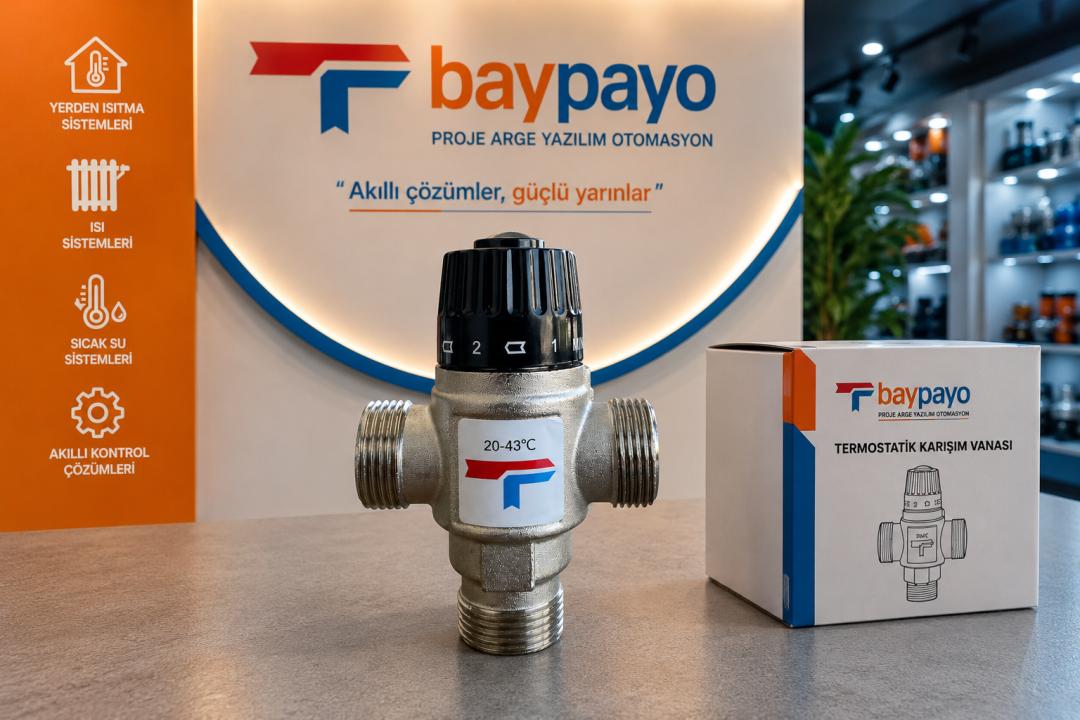
A heating system does not become more comfortable simply because the water is hot. Different heating applications require different water temperatures, and controlling this temperature is essential for efficient and comfortable operation. A…
What Is a Thermostatic Mixing Valve?
A thermostatic mixing valve (TMV) is a temperature-control valve designed to mix hot and cooler water in order to provide a controlled outlet temperature.
In residential heating systems, the heat source may produce water at a considerably higher temperature than the heating circuit actually requires. This is especially relevant when different heating circuits operate at different temperature levels.
For example, a central heating system may supply relatively high-temperature water, while an underfloor heating circuit may require a lower water temperature. A thermostatic mixing valve can combine the hot supply water with cooler return water to create a more suitable temperature for the heating circuit.
<h3>How Does a Thermostatic Mixing Valve Work?</h3>
A thermostatic mixing valve contains a temperature-sensitive element that reacts to changes in water temperature.
When the mixed outlet temperature increases above the selected setting, the valve can reduce the hot-water contribution and allow more cooler water into the mixture.
When the temperature falls, the valve can increase the hot-water contribution.
This automatic response helps maintain a more stable outlet temperature without requiring continuous manual adjustment.
Where Are Thermostatic Mixing Valves Used?
Thermostatic mixing valves are widely used in residential and building heating applications.
The main application categories include:
- Individual residential heating systems
- Central heating systems
- Heat Interface Units
- Underfloor heating systems
- Radiator heating systems
- Domestic hot water systems
- Combined heating systems
The correct valve depends on the application, required temperature, flow rate, pressure and system design.
Thermostatic Mixing Valves in Residential Heating Systems
In individual homes and apartments, thermostatic mixing valves can be used where different heating circuits require different water temperatures.
One common example is a boiler and underfloor heating combination.
The boiler may produce water at a temperature that is higher than the required underfloor heating temperature. Instead of sending the high-temperature water directly into the underfloor heating circuit, the system can use a mixing arrangement to prepare water at a more suitable temperature.
Boiler and Underfloor Heating
Underfloor heating generally operates with lower water temperatures than many traditional radiator systems.
A thermostatic mixing valve can therefore be incorporated into the heating circuit to help control the water temperature supplied to the underfloor heating manifold.
This can provide more appropriate temperature control and contribute to a comfortable indoor environment.
Thermostatic Mixing Valves in Central Heating Systems
Central heating systems are commonly used in apartment buildings and residential developments where one central heat source supplies multiple dwellings.
The central boiler or heating centre may operate at a temperature that is not suitable for every individual circuit.
For example, a building may contain both radiator circuits and underfloor heating circuits.
A thermostatic mixing valve can be used within the appropriate circuit to help achieve the required temperature.
Apartment and Residential Developments
In residential central heating systems, mixing valves may be used for:
- Underfloor heating circuits
- Low-temperature heating circuits
- Domestic hot water applications
- Different heating zones
- Heat Interface Unit applications
The exact configuration should always be determined by the heating system design.
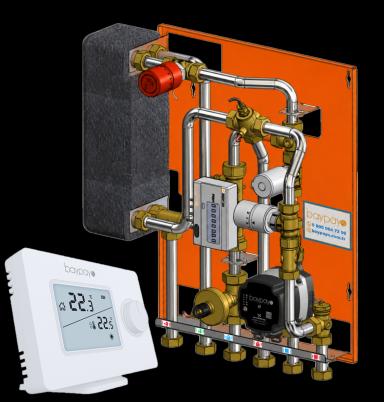
Thermostatic Mixing Valve in a Heat Interface Unit
A Heat Interface Unit (HIU) is a compact system used in centrally heated residential buildings to provide controlled heating and domestic hot water to individual dwellings.
Depending on the design, an HIU can contain several components for heat transfer, temperature control, flow regulation and system management.
A thermostatic mixing valve can be incorporated where temperature control is required.
Why Is Temperature Control Important in an HIU?
A Heat Interface Unit receives energy from a central heating network and transfers that energy to the dwelling's heating and domestic hot water systems.
The temperature requirements of these circuits may differ.
A mixing valve can therefore help control the temperature of a particular circuit and contribute to a more stable heating or hot-water supply.
Thermostatic Mixing Valve for Underfloor Heating
Underfloor heating is one of the most important residential applications for thermostatic mixing valves.
Unlike conventional radiators, underfloor heating distributes heat across a large floor surface.
This allows the system to operate effectively with lower water temperatures.
A mixing valve can combine higher-temperature supply water with cooler return water to produce a suitable temperature for the underfloor heating circuit.
Why Is Temperature Control Important in Underfloor Heating?
The objective of underfloor heating is not simply to circulate hot water.
The system must provide controlled and balanced heat distribution across the floor.
If water is supplied at an unnecessarily high temperature, the system may not operate according to its intended design.
The actual required temperature depends on factors such as:
- Building heat loss
- Pipe spacing
- Floor construction
- Floor covering
- Design flow rate
- Heating system design
For this reason, the mixing valve should be selected as part of the complete underfloor heating system.
Thermostatic Mixing Valve for Domestic Hot Water
Thermostatic mixing valves can also be used in domestic hot water systems.
Hot water may be stored or produced at a higher temperature than the temperature required at showers and taps.
A thermostatic mixing valve can mix hot water with cold water to provide a more controlled outlet temperature.
This is particularly useful where user comfort and temperature stability are important.
Shower Comfort
Nobody wants the shower temperature to suddenly become too hot or too cold.
A correctly selected and installed thermostatic mixing valve can help maintain a more stable hot-water temperature.
This makes thermostatic mixing valves an important component in many residential domestic hot water systems.
Benefits of a Thermostatic Mixing Valve
A properly selected thermostatic mixing valve can provide several benefits.
Temperature Control
It helps control the water temperature supplied to a specific heating or hot-water circuit.
Better Heating Balance
It can contribute to more stable operation when different temperature levels are required.
Underfloor Heating Compatibility
It can help prepare suitable water temperatures for low-temperature underfloor heating systems.
User Comfort
Stable water temperature can improve comfort, particularly in domestic hot water applications.
Reduced Manual Adjustment
Because the valve responds to temperature changes automatically, continuous manual adjustment may not be necessary.
How to Choose a Thermostatic Mixing Valve
Selecting a thermostatic mixing valve should involve more than simply choosing the correct pipe diameter.
Important factors include:
- Valve size
- Required flow rate
- Operating pressure
- Supply temperature
- Required outlet temperature
- Temperature range
- Connection type
- Heating application
- Installation configuration
A valve intended for underfloor heating may have different requirements from a valve used for domestic hot water.
Therefore, the application should always be established before selecting the product.
Thermostatic Mixing Valve vs. Manual Mixing Valve
A manual mixing valve requires the user or installer to determine the valve position.
If system conditions change, manual adjustment may be necessary.
A thermostatic mixing valve, on the other hand, uses a temperature-sensitive mechanism to respond automatically to changes in water temperature.
This makes it particularly useful where maintaining a relatively stable outlet temperature is important.
Thermostatic Mixing Valve and Underfloor Heating Manifold
The underfloor heating manifold distributes water to the individual heating circuits.
In systems using a mixing group, the thermostatic mixing valve can help control the temperature of the water entering the manifold.
However, the mixing valve is only one component of the complete system.
The manifold, circulation pump, actuators, room thermostats, flow meters and control equipment should all be compatible with the overall system design.
Frequently Asked Questions
What is a thermostatic mixing valve?
A thermostatic mixing valve mixes hot and cooler water to help maintain a controlled outlet temperature.
What is a thermostatic mixing valve used for?
It is used for temperature control in residential heating, central heating, underfloor heating, Heat Interface Units and domestic hot water systems.
Is a thermostatic mixing valve suitable for underfloor heating?
Yes. Depending on the system design, it can help provide a suitable lower water temperature for an underfloor heating circuit.
Can a thermostatic mixing valve be used in a Heat Interface Unit?
Yes, depending on the HIU design and the temperature-control requirements of the heating or domestic hot water circuit.
Does a thermostatic mixing valve save energy?
The valve itself does not guarantee energy savings. However, when correctly integrated into a properly designed heating system, it can help control unnecessary high water temperatures and improve system operation.
Conclusion
A thermostatic mixing valve is an important temperature-control component for residential and building heating systems. It can be used in individual homes, central heating systems, Heat Interface Units, underfloor heating, radiator systems and domestic hot water applications.
The key principle is simple: not every heating circuit requires the same water temperature. A thermostatic mixing valve helps manage this difference by combining hot supply water with cooler return water and controlling the resulting outlet temperature.
For this reason, the valve should not be selected based solely on price or connection size. The required temperature, flow rate, pressure, application and complete system design should all be considered.
When correctly selected and installed, a thermostatic mixing valve can contribute to better temperature control, improved comfort and more balanced operation of residential heating and hot-water systems.