
What Is an Electrothermal Actuator? Valve Actuators & Actuated Valves
Last updated: August 29, 2026
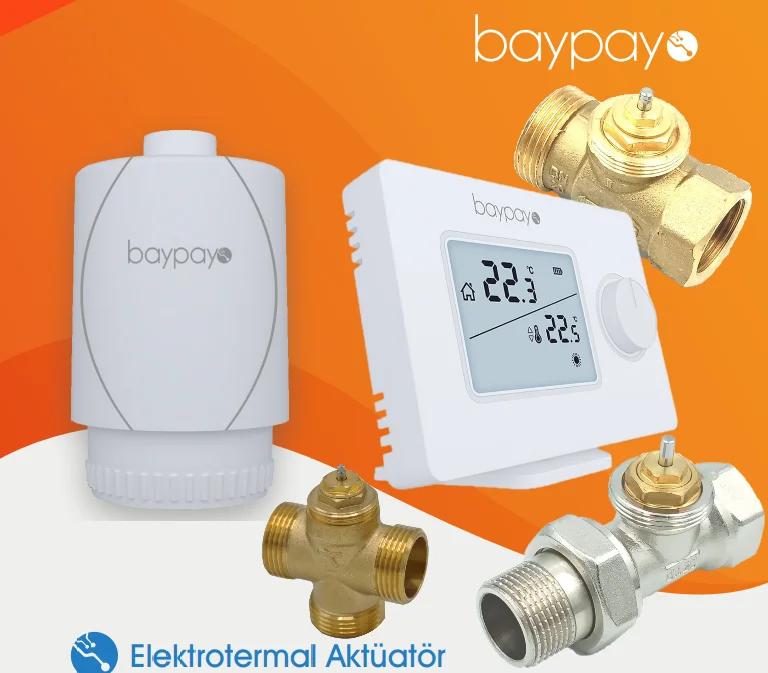
What actually opens the valve when a room thermostat calls for heat? Discover how actuators work, how valve actuators control heating and cooling systems, and where 2-way, 3-way and 6-way actuated valves are used—from underfloor heating and…
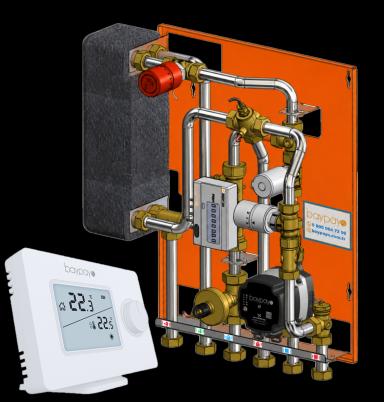
What Is an Actuator? Valve Actuators, Actuated Valves, Types, Applications and Installation
A room reaches its target temperature.
The thermostat detects the temperature.
The building control system decides that heating is required.
But there is still one question:
Who actually opens the valve?
This is where the actuator comes into play.
An actuator converts a control signal into mechanical movement. In HVAC and hydronic systems, a valve actuator moves a valve to open, close, or modulate the flow of water or another fluid.
In simple terms:
The thermostat decides, the actuator moves, and the valve controls the flow.
This simple relationship is at the heart of modern underfloor heating, hydronic heating, cooling, ventilation and building automation systems.
An actuator may be a relatively small component, but it can determine how effectively an entire heating or cooling zone responds to changing demand.
What Does “Actuator” Mean?
The word actuator refers to a device that converts an energy input or control signal into physical movement.
In HVAC applications, an actuator can be used to change the position of:
- Valves
- Dampers
- Air handling components
- Heating and cooling control valves
- Hydronic circuit valves
ASHRAE defines an actuator as a device operated electrically, pneumatically or hydraulically that changes the position of movable devices such as valves or dampers.
In hydronic HVAC systems, however, the term valve actuator is particularly common.
For example:
Room thermostat → Controller → Valve actuator → Control valve → Water flow
The actuator is therefore the physical link between the electronic control system and the hydraulic system.
What Is a Valve Actuator?
A valve actuator is the device that operates a valve automatically.
The valve itself controls the flow.
The actuator moves the valve.
The controller determines what position the valve should have.
This distinction is important.
An actuator is not necessarily a valve.
A valve is the hydraulic component.
An actuator is the mechanical drive that operates it.
When they are combined, the result is commonly described as an:
Actuated valve
or:
Motorized valve
In HVAC engineering, manufacturers commonly refer to complete assemblies as valve-actuator combinations or actuated control valves.
What Is an Actuated Valve?
An actuated valve is a valve operated automatically by an actuator instead of being adjusted manually.
The operating sequence is straightforward:
Control signal → Actuator → Valve movement → Flow control
For example, in an underfloor heating system, a room thermostat detects that the room temperature is below the setpoint.
The thermostat sends a heating demand to the controller.
The controller energizes the actuator.
The actuator opens the manifold valve.
Hot water flows through the underfloor heating circuit.
When the room reaches the required temperature, the control system removes the heating demand and the actuator closes the valve according to the system's control sequence.
This is how a simple valve becomes part of an automatic zone control system.
How Does an Electric Valve Actuator Work?
An electric valve actuator uses electrical energy to move a valve.
A typical HVAC control loop consists of three main elements.
1. Controller
The controller receives information from:
- Room thermostats
- Temperature sensors
- Building automation systems
- HVAC controllers
- PLC systems
- BMS/BAS systems
It determines the required valve position.
H3: 2. Valve Actuator
The actuator receives the control signal and physically moves the valve.
Depending on the actuator and control strategy, this may be:
- On/off control
- Floating-point control
- Modulating control
- Position control
Modern HVAC systems commonly use electronic signals to control valve position.
3. Control Valve
The valve regulates the flow of water or another fluid.
The complete control loop can therefore be represented as:
Sensor → Controller → Actuator → Valve → Flow
This is one of the fundamental control structures used in modern hydronic HVAC systems.
Types of Valve Actuators
There is no single type of actuator suitable for every application.
The correct actuator depends on the valve design, required movement, control signal, power supply and application.
Common actuator categories include:
Electrothermal Actuator
An electrothermal actuator is widely used on small heating valves and underfloor heating manifold valves.
It is particularly common in room-by-room underfloor heating control.
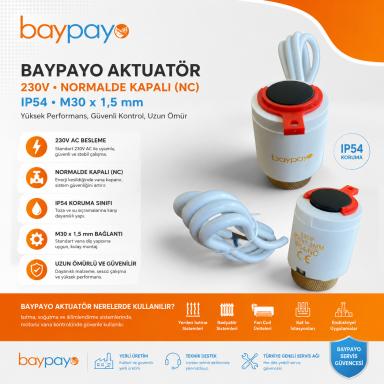
For Baypayo's 230V NC product, electrothermal actuator is a more natural English technical term than simply translating the Turkish product name as “electric actuator.”
Electric Rotary Actuator
A rotary actuator produces rotational movement and is commonly used with rotary control valves.
This type of actuator is widely used in hydronic HVAC applications where the valve is operated by rotating a stem or shaft. Modern control valves from major HVAC manufacturers use rotary actuators for 2-way, 3-way and 6-way valve applications.
Linear Actuator
A linear actuator produces linear movement.
Instead of rotating a valve shaft, the actuator pushes or pulls a mechanism.
Linear actuators can be used in valve applications and many other automation systems.
Mini Linear Actuator
A mini linear actuator is a compact linear drive designed for applications where installation space is limited.
When selecting a mini linear actuator, physical size is only one consideration. Engineers should also consider:
- Stroke length
- Force
- Operating voltage
- Speed
- Duty cycle
- Control method
2-Way Actuated Valves
A 2-way valve has two ports and is primarily used to control flow through a circuit.
When equipped with an actuator, it becomes a:
2-way actuated valve
or:
2-way motorized valve
Typical applications include:
- Heating circuits
- Cooling circuits
- Fan coil units
- Radiator systems
- Underfloor heating
- Heating coils
- Cooling coils
- Zone control
Two-way control valves are particularly common in variable-flow hydronic systems.
Deending on the valve and actuator type, the valve may operate as an on/off valve or a modulating control valve.
H2: 3-Way Actuated Valves
A 3-way valve has three ports.
Its application generally falls into two main categories:
- Mixing
- Diverting
In a mixing application, two flows are combined into one outlet.
In a diverting application, one flow is directed toward one of two outlets.
A 3-way actuated valve is therefore particularly useful in hydronic systems where flow direction or mixing temperature needs to be controlled automatically.
Typical applications include:
- Heating circuits
- Mixing circuits
- Underfloor heating
- Boiler systems
- Heat pump systems
- HVAC systems
- Temperature control applications
4-Way Actuated Valves
A 4-way valve has four ports and is used in more specialized hydronic arrangements.
Four-way valves can be used to manage two hydraulic circuits and are particularly associated with certain heating-system configurations.
Their operation depends heavily on system design, piping arrangement and the required hydraulic sequence.
For this reason, a 4-way actuated valve should always be selected according to the actual hydraulic design rather than simply by the number of ports.
6-Way Actuated Valves
A 6-way valve is a more specialized HVAC control solution.
It is particularly relevant to four-pipe heating and cooling systems, including:
- Fan coil units
- Chilled beams
- Radiant ceiling systems
- Four-pipe terminal units
A 6-way valve can combine heating and cooling changeover functions in a single valve assembly.
Modern HVAC manufacturers describe six-way valves as solutions for switching between heating and cooling circuits in four-pipe systems.
This makes the 6-way actuated valve particularly interesting for modern HVAC and building automation applications.
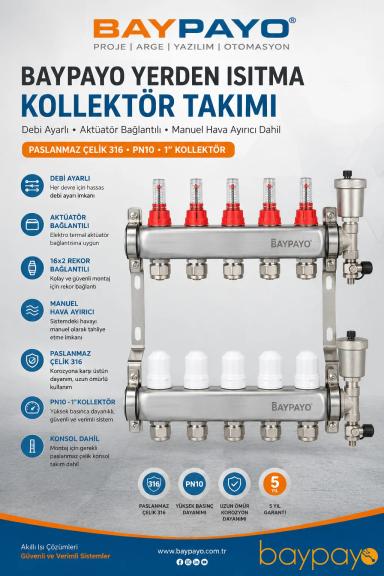
Actuators in Underfloor Heating Systems
One of the most important applications of electrothermal actuators is underfloor heating.
An underfloor heating manifold distributes heated water to individual circuits.
Each room can have its own heating circuit.
For example:
- Living room
- Kitchen
- Bedroom
- Bathroom
- Children's room
- Office
Each circuit can be controlled independently.
The typical arrangement is:
Room Thermostat → Wiring Centre → Electrothermal Actuator → Manifold Valve → Heating Circuit
When a room requires heat, the corresponding actuator opens the valve.
When the heating demand ends, the valve closes.
This allows the heating system to operate as a series of independent zones rather than as one uncontrolled circuit.
What Is an Actuated Underfloor Heating Manifold?
An actuated underfloor heating manifold is a manifold equipped with actuators that automatically control individual heating circuits.
This is one of the most practical applications for electrothermal actuators.
Imagine a six-room house.
Instead of manually adjusting six valves, each room can have:
Room thermostat → actuator → manifold circuit
The living room can request heat while the bedroom does not.
The bedroom can later request heat while the living room does not.
The control system responds to the individual demand of each zone.
This is the foundation of individual room temperature control in modern underfloor heating.
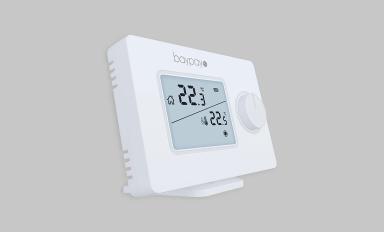
Room Thermostats and Actuators
A room thermostat measures the temperature.
The actuator operates the valve.
These two devices therefore perform different jobs.
How the System Works
Suppose the room thermostat is set to:
22°C
The actual room temperature falls to:
20.5°C
The thermostat detects the difference and sends a heating demand.
The controller energizes the relevant actuator.
The actuator opens the manifold valve.
Hot water flows through the underfloor heating circuit.
When the room reaches the required temperature, the controller removes the heating demand.
The actuator closes the valve according to the system's operating principle.
This simple process provides automatic room-by-room temperature control.
Actuators in Smart Buildings and Building Automation
Modern buildings increasingly rely on Building Automation Systems (BAS) and Building Management Systems (BMS).
In these systems, actuators become part of a larger digital control architecture.
A typical system may include:
Temperature Sensor → BMS → HVAC Controller → Valve Actuator → Control Valve
The building management system can coordinate:
- Heating
- Cooling
- Ventilation
- Room temperature
- Heating/cooling changeover
- Time schedules
- Energy management
- Equipment operation
The actuator is the component that turns the digital command into physical movement.
This is why actuators are an important part of smart-building infrastructure.
Actuators in Heating, Cooling and HVAC Systems
Actuators are widely used throughout HVAC systems.
Applications include:
- Hydronic heating
- Hydronic cooling
- Fan coil units
- Heating coils
- Cooling coils
- Radiator systems
- Underfloor heating
- Heat Interface Units
- Heat pumps
- Chiller systems
- Air handling units
- Building automation systems
The actuator controls the valve position, while the valve regulates the flow of water.
HVAC manufacturers commonly describe these products as control valves and valve actuators for heating and cooling circuits.
Actuators in Ventilation Systems
The word actuator is not limited to water valves.
Ventilation systems also use actuators, particularly for air dampers.
A damper actuator can control:
- Fresh-air dampers
- Return-air dampers
- Exhaust-air dampers
- Mixing dampers
- Air handling unit dampers
This creates an important terminology distinction:
Valve actuator → Controls fluid flow
Damper actuator → Controls air flow
The same basic principle applies in both cases:
Control signal → Actuator → Mechanical movement → Flow control
How to Install a Valve Actuator
Actuator installation depends on the specific actuator and valve combination.
However, several basic principles apply.
Check Valve Compatibility
The valve and actuator must be mechanically compatible.
Check:
- Connection type
- Thread size
- Valve stem
- Actuator mounting system
- Valve travel
- Required operating force or torque
For example, the Baypayo actuator discussed here uses an M30 x 1.5 mm connection.
Check the Electrical Specification
The actuator voltage must match the control system.
For the Baypayo product:
230V AC
The control wiring must follow the product's electrical diagram and applicable electrical installation requirements.
Mount the Actuator Correctly
The actuator should be installed according to the manufacturer's installation instructions.
Do not force an actuator onto an incompatible valve.
Test the Complete Control Loop
After installation, the complete system should be tested:
Thermostat → Controller → Actuator → Valve → Heating circuit
The actuator should respond correctly to the control signal and the valve should operate as intended.
How to Choose the Right Actuator
Choosing the correct actuator requires more than checking the voltage.
Valve Type
Is it a:
- 2-way valve?
- 3-way valve?
- 4-way valve?
- 6-way valve?
Actuator Type
Is the application better suited to:
- Electrothermal actuator?
- Rotary actuator?
- Linear actuator?
- Spring-return actuator?
- Modulating actuator?
Power Supply
Common options include:
- 24V AC/DC
- 120V
- 230V AC
The actuator must match the control system.
Control Signal
Depending on the actuator, the control method may be:
- On/off
- Floating point
- 0–10V
- 2–10V
- Modulating
- Other digital control protocols
HVAC valve actuators are available with different control strategies depending on the application.
Normally Open or Normally Closed
The actuator may be:
NO – Normally Open
or:
NC – Normally Closed
The correct configuration depends on the intended operating sequence.
Baypayo 230V NC Electrothermal Actuator
For underfloor heating applications, the correct English product terminology for the Baypayo product is:
Baypayo 230V NC Electrothermal Actuator
rather than a literal translation such as “Baypayo 230V Normally Closed Actuator Motor.”
Product Specifications
Operating voltage: 230V AC
Operating type: Normally Closed (NC)
Connection: M30 x 1.5 mm
Protection rating: IP54
Application: Heating and HVAC valve control
Typical use: Underfloor heating manifolds and compatible hydronic valve applications
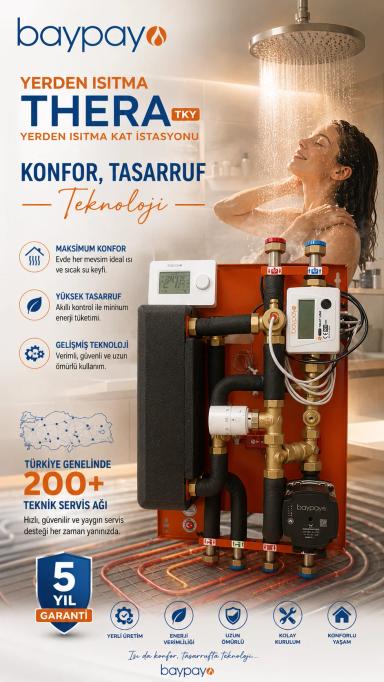
The product can be positioned within the wider Baypayo heating ecosystem alongside room thermostats, underfloor heating manifolds, Heat Interface Units, heat meters, metering systems and software solutions.
Why Choose a Baypayo Actuator?
The actuator is only one component of a heating system.
The real value comes from how effectively it works together with the rest of the system.
A typical Baypayo solution may combine:
Room Thermostat
↓
Control System
↓
Electrothermal Actuator
↓
Underfloor Heating Manifold
↓
Heating Circuit
For larger projects, the system can also incorporate:
Heat Interface Units + Heat Meters + Water Meters + Remote Meter Reading + Software
This makes the actuator part of a broader heating and energy-management solution.
Baypayo Technology and Engineering Support
Baypayo focuses on heating technology, metering, control, automation and software solutions.
This provides an advantage when an actuator needs to be evaluated as part of a complete project rather than as an isolated component.
For contractors, developers and mechanical installation companies, the important question is not simply:
“Which actuator should I buy?”
The better question is:
“Which actuator, valve, thermostat and control architecture will work correctly together in my project?”
That is where engineering support becomes important.
Hardware, Software and Integrated Heating Solutions
Modern heating systems increasingly combine mechanical equipment with digital technologies.
A complete project may involve:
- Heating equipment
- Actuators
- Room thermostats
- Heat meters
- Water meters
- Remote meter reading
- Data collection
- Heat cost allocation
- Online monitoring
- Software
Baypayo's broader technology portfolio allows these components to be considered together.
The actuator provides the physical control.
The thermostat provides room-level demand.
The meter provides measurement.
The software provides monitoring and management.
Together, these technologies create a more complete heating control and energy management system.
Baypayo Service and Technical Support
For heating and HVAC projects, technical support after installation can be just as important as the product itself.
Consider a system containing:
Room Thermostat → Controller → Actuator → Valve → Manifold → Heat Interface Unit
If something goes wrong, the problem may not immediately be obvious.
Is the thermostat sending the signal?
Is the controller operating?
Is the actuator receiving power?
Is the valve moving?
Is the manifold circuit hydraulically balanced?
Having coordinated technical support can make troubleshooting significantly easier.
This is particularly valuable for developers and contractors working on projects with large numbers of heating control components.
One Technical Partner for a Complete Heating Solution
A major advantage of a system-based approach is reducing the number of technical parties involved.
Instead of purchasing:
- Actuators from one company
- Thermostats from another
- Manifolds from another
- Heat Interface Units from another
- Metering systems from another
- Software from another
a project can be designed around a coordinated product ecosystem.
For Baypayo, the objective is therefore not simply:
“Sell an actuator.”
The objective is:
“Provide the actuator as part of a correctly engineered heating and control solution.”
That difference becomes particularly important in large residential developments, commercial buildings and complex HVAC installations.
Frequently Asked Questions About Actuators
What is an actuator?
An actuator is a device that converts an energy source or control signal into mechanical movement. In HVAC applications, it commonly operates valves or dampers.
What is a valve actuator?
A valve actuator is the mechanism that moves a valve automatically in response to a control signal.
What is an actuated valve?
An actuated valve is a valve fitted with an actuator so that it can be operated automatically.
What is a motorized valve?
A motorized valve is a valve operated by an electric motor or electric actuator. The term is commonly used in HVAC and hydronic heating applications.
What is a 2-way actuated valve?
A 2-way actuated valve has two ports and is commonly used to control flow through a heating or cooling circuit.
What is a 3-way actuated valve?
A 3-way actuated valve has three ports and can be configured for mixing or diverting applications.
What is a 6-way actuated valve?
A 6-way actuated valve is commonly used in four-pipe heating and cooling systems, including fan coil units and radiant systems, to manage heating and cooling circuits.
What is an electrothermal actuator?
An electrothermal actuator is an electrically operated actuator commonly used to operate small heating valves, particularly on underfloor heating manifolds.
What is a linear actuator?
A linear actuator produces straight-line mechanical movement rather than rotary movement.
What is a mini linear actuator?
A mini linear actuator is a compact actuator that produces linear movement where installation space is limited.
Can an actuator be controlled by a room thermostat?
Yes. In a suitable control system, a room thermostat can send a heating or cooling demand to the controller, which then operates the actuator.
What is an actuated underfloor heating manifold?
It is an underfloor heating manifold equipped with actuators that automatically control individual heating circuits according to room demand.
Actuators Are Small Components with a Critical Role
An actuator may be physically small, but it plays a critical role in modern heating and HVAC control.
The thermostat measures.
The controller decides.
The actuator moves.
The valve regulates.
The system responds.
This simple chain is behind many of the automated heating and cooling systems used in modern buildings.
From underfloor heating actuators and actuated manifolds to 2-way, 3-way and 6-way actuated valves, from fan coil units to smart building automation, actuators provide the physical movement required to turn an electronic control command into real hydraulic or air-flow control.
The key is selecting the right actuator for the right valve and the right control strategy.
For Baypayo, the actuator is not simply a standalone component. It can be part of a wider solution combining room thermostats, underfloor heating manifolds, Heat Interface Units, metering technology, remote reading, software and engineering support.
That is where the value of a complete heating technology partner becomes clear.